


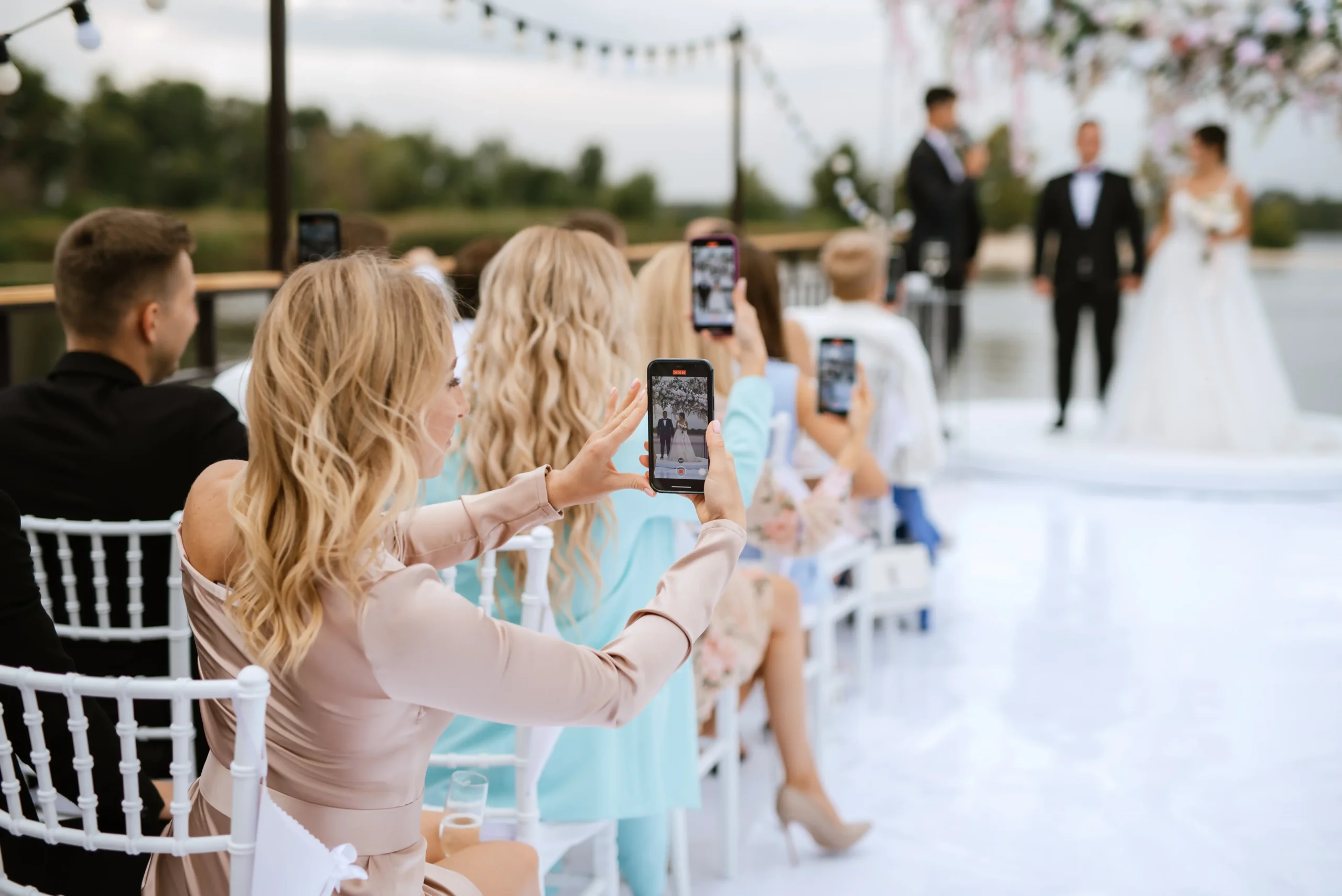
Weddings today are often shared in real time. Guests capture ceremony moments on their phones, post photographs to Instagram, upload videos to TikTok, and share celebrations with friends who could not attend. While these posts can be a lovely way to celebrate a couple, they can also raise questions about privacy, professional photography, and which moments should remain personal.
For couples planning a wedding in New York or New Jersey, setting social media expectations can be particularly important when coordinating a ceremony, reception, professional photography, and carefully planned décor. You may want guests to share the celebration freely while keeping certain moments private, or you may prefer everyone to put their phones away during the ceremony.
The key is to establish clear wedding rules for guests without making anyone feel unwelcome. With thoughtful wording, well-timed communication, and a consistent approach, you can protect your preferences while allowing friends and family to enjoy the occasion.
How Do You Set Wedding Social Media Rules Without Offending Guests?
The best way to set wedding social media rules is to communicate your preferences early, explain them positively, and make the guidelines easy to understand. Guests should know whether they can take photographs, post during the ceremony, tag the couple, or share images of other attendees.
Follow these five steps:
- Decide what you want to keep private. Determine whether your preferences apply to the ceremony, the reception, specific moments, or the entire event.
- Agree on the rules as a couple. Make sure you share the same expectations before communicating them to guests.
- Explain the request warmly. Focus on what you want guests to experience rather than what they should not do.
- Communicate before the wedding. Include relevant details on your wedding website, invitation insert, or guest information message.
- Repeat important instructions on the day. Use a discreet sign or a brief announcement when necessary.
Clear expectations give guests an opportunity to understand your wishes before they arrive, reducing awkward conversations during the celebration.
Why Should Couples Establish Social Media Guidelines Before the Wedding?
Wedding social media policies are about more than controlling photographs. They help couples balance privacy, professional photography, guest participation, and the atmosphere they want to create.
For example, guests holding phones above their heads during the ceremony can obstruct the view of other attendees and interfere with the photographer’s planned shots. A guest might also post a photograph before the couple has shared their own announcement, or upload an image of someone who would prefer not to appear online.
A thoughtful policy helps prevent these situations without assuming that guests have bad intentions.
The guiding principle is to make your expectations clear while respecting the fact that guests may have different habits and comfort levels around social media.
What Wedding Social Media Rules Should You Consider?
Not every couple needs a completely unplugged wedding. Choose guidelines that reflect your priorities rather than adopting rules simply because they are popular.
1. Decide Whether You Want an Unplugged Ceremony
An unplugged ceremony asks guests to put away phones, cameras, and other recording devices during the ceremony. This allows everyone to focus on the moment and helps your professional photographer work without competing screens.
How to communicate it:
“We’re so happy to share this moment with you. Please keep phones and cameras tucked away during the ceremony so everyone can be fully present. Our photographer will capture the memories for us to share.”
This is a clear example of wedding unplugged ceremony etiquette. The wording expresses appreciation and explains the intention without sounding demanding.
You can also choose a partial restriction, such as keeping the processional, vows, and first kiss phone-free while allowing photographs afterward.
2. Set Expectations for Posting Photos
You may be comfortable with guests sharing reception photographs but prefer to announce your marriage online yourselves.
How to communicate it:
“We’d love to share our wedding news and photographs first. Please wait for our announcement before posting pictures of the celebration. Thank you for helping us keep this moment special.”
If you are comfortable with immediate posting, you can instead encourage guests to share their favorite moments using a wedding hashtag.
The important thing is to decide whether you want a posting delay, a restriction on particular images, or no restrictions beyond the ceremony.
3. Consider Guest Privacy and Tagging
Not everyone wants their photographs shared publicly. Some guests may have personal, professional, or privacy-related reasons for limiting their online presence.
How to communicate it:
“Please check with friends and family before posting or tagging them in photographs. We appreciate everyone’s help in making the celebration comfortable for all our guests.”
You can also request that guests avoid sharing private family moments or photographs of children without permission from their parents or guardians.
4. Clarify Expectations for Professional Photography
Guests often take photographs because they want to preserve memories, not because they intend to interfere. However, competing with the professional photographer can affect sightlines and timing.
If you have hired a photographer or videographer, consider asking guests to keep aisles clear, avoid stepping into the photographer’s path, and refrain from using flash when requested.
For a phone-free ceremony, explain that professional images will be available to share later if that is part of your arrangements. Do not promise a particular delivery date unless it has been confirmed with your photographer.
How to Communicate Wedding Social Media Policies Clearly
Knowing how to communicate wedding social media policies is just as important as deciding what the rules should be. Use a few well-chosen communication points rather than sending repeated messages that may feel overly restrictive.
On Your Wedding Website
Add a short section titled “Photography and Social Media” or “A Note About Phones.” Explain the policy in two or three sentences, including when it applies and whether guests can take pictures afterward.
On Invitation Inserts or Guest Messages
Keep printed instructions brief. If the ceremony is unplugged, mention it on an insert or direct guests to your wedding website for additional information.
For a policy about posting photographs, a message sent before the wedding may be more effective than introducing the rule after guests have already arrived.
Through Ceremony Signage and Announcements
A tasteful sign at the ceremony entrance can remind guests to silence or put away their phones. If the restriction is especially important, ask your officiant or another designated person to make a short announcement before the ceremony begins.
Avoid relying entirely on signage if you need every guest to understand the rule. A brief verbal reminder can reinforce the written message.
What We Observe: Small Communication Details Make a Difference
At White Wave Events, a practical approach to wedding planning and design means considering how guest instructions fit into the wider event experience. Social media rules may seem like a small detail, but their timing and presentation can influence how guests respond.
One consideration is consistency. If your wedding website says the ceremony is phone-free but the signage is unclear, guests may be unsure whether the rule is still in effect. Similarly, if you want to delay online posts until after your announcement, telling guests only at the reception may be too late.
Another consideration is deciding who will communicate the policy. Couples should not have to interrupt their own celebration to remind individual guests about phones or photographs. Agreeing in advance on whether an officiant, host, or designated member of the wedding team will deliver a reminder can make the process more comfortable.
Finally, consider where the message appears. A short, welcoming sign can communicate a phone-free ceremony without distracting from the ceremony décor. Clear wording and thoughtful placement help the instruction feel like part of the event rather than an unexpected restriction.
How Can You Balance Social Media Rules With Modern Wedding Trends?
Social media can be an enjoyable part of a wedding. Guests may love sharing candid photographs, posting reception details, or using a personalized hashtag to collect memories from different perspectives.
You do not have to choose between a completely private wedding and unrestricted posting. A balanced policy can allow guests to take photographs during the reception while protecting the ceremony, delaying public announcements, or limiting the sharing of specific moments.
For instance, you might request an unplugged ceremony, permit photographs during cocktail hour, and invite guests to share reception images after your first dance. Another couple may prefer to keep the entire celebration private.
Neither approach is automatically better. Choose the level of sharing that reflects your comfort, and communicate it clearly enough that guests can follow it without guessing.
How Can a Wedding Planner Help Manage Guest Communication?
A wedding planner can help incorporate social media guidelines into the broader guest communication and event timeline. This may include coordinating signage, identifying the right time for announcements, and ensuring that ceremony instructions align with the couple’s preferences.
Planning support can also help coordinate these expectations with the officiant and photography team, where appropriate, so that everyone understands the intended approach.
For couples organizing a wedding in New York or New Jersey, these details can be considered alongside venue logistics, ceremony design, and the overall guest experience. The goal is to make the policy clear without allowing it to overshadow the celebration.
Make Your Wedding Rules Reflect Your Priorities
Your wedding social media policy should reflect what matters to you as a couple. You may value an uninterrupted ceremony, want to protect the privacy of your guests, or simply prefer to share the first photographs yourselves.
Decide what you need, explain it warmly, and give guests enough notice to understand your expectations. When your guidelines are reasonable and consistent, you can protect meaningful moments without making the celebration feel unnecessarily formal.
Final Thoughts
Setting social media rules does not have to create tension between you and your guests. Clear expectations, considerate wording, and early communication can help everyone understand how to participate respectfully.
Whether you choose an unplugged ceremony, a delay on social media posts, or a more relaxed approach, make the decision together and communicate it before the wedding day.
Planning Your Wedding in New York or New Jersey?
White Wave Events helps couples approach wedding planning and design with thoughtful attention to their vision, event details, and guest experience. If you are planning your celebration and want the practical details to complement the atmosphere you envision, reach out to White Wave Events to discuss your plans and explore suitable planning support.
Connect with White Wave Events to begin planning a celebration that feels personal, considered, and true to you.
FAQs About Wedding Social Media Rules
Q1. What are the most important wedding rules for guests regarding social media?
A. First, communicate whether phones are permitted during the ceremony, when guests may post photographs, and whether tagging or sharing images of other attendees requires permission. Keep the rules simple and consistent.
Q2. Is it rude to ask guests not to take photos during the ceremony?
A. Second, no. Couples can request an unplugged ceremony to encourage guests to be present and allow professional photographers to work without obstruction. A warm explanation helps guests understand the reason.
Q3. How do you politely ask wedding guests not to post photos?
A. Third, explain your preference before the wedding and give guests a clear alternative, such as waiting until you share your official announcement. Thank them for respecting your wishes.
Q4. Where should you communicate wedding social media policies?
A. Fourth, use your wedding website, invitation inserts, or a pre-wedding message. Reinforce important rules with discreet signage or a brief announcement before the ceremony.
Q5. Can a wedding planner help communicate social media rules?
A. Finally, a wedding planner can help coordinate signage, announcements, and timing with the broader event plan. White Wave Events can discuss your wedding planning needs in New York and New Jersey and help you explore appropriate support for your celebration.