


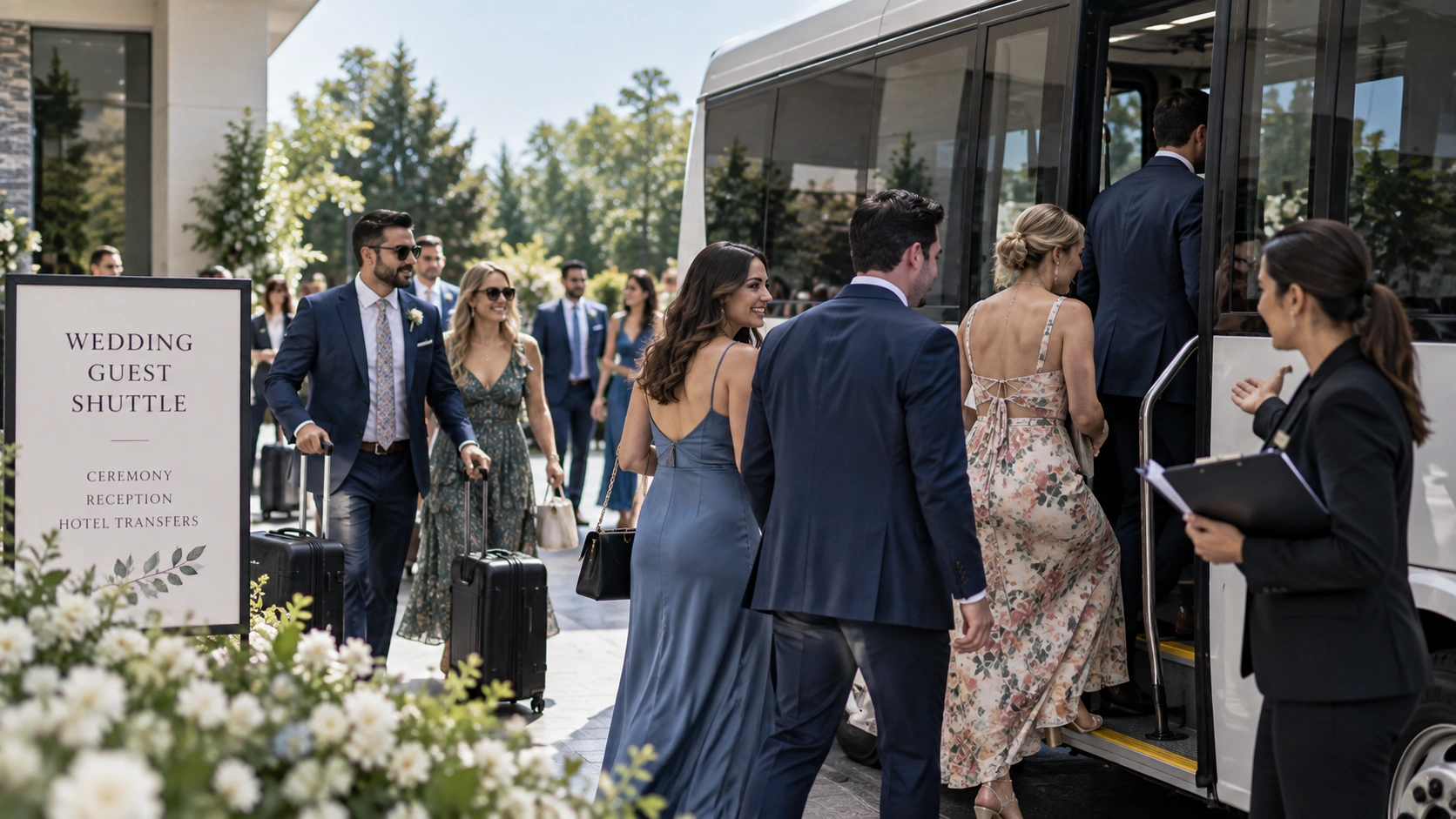
Getting guests to and from the wedding venue may seem like a simple logistical detail, but transportation can have a major impact on how smoothly the wedding day unfolds. When guests are traveling from different hotels, venues, or locations, even small timing gaps can affect the ceremony, reception, and overall guest experience.
Thoughtful wedding guest transportation gives everyone a clear plan for getting where they need to be without having to figure out unfamiliar routes, parking, or timing on their own. This can be especially helpful for weddings in New York and New Jersey, where venues may be located away from guest accommodations and travel times can vary throughout the day.
The key is to plan transportation as part of the wedding timeline rather than treating it as a last-minute vendor detail.
How Do You Plan Transportation for Wedding Guests?
Start by mapping out every location your guests may need to travel between.
This could include:
- Hotels
- Ceremony venue
- Reception venue
- Welcome events
- After-party locations
- Transportation hubs
Once the locations are established, determine how many guests require transportation and when they need to arrive at each location.
A simple transportation plan should answer three questions:
Where are guests leaving from? Where are they going? When do they need to arrive?
From there, you can determine whether shuttles, buses, vans, rideshare options, or a combination of transportation methods makes the most sense.
Build Transportation Around the Wedding Timeline
Transportation should work backward from the events of the day.
If the ceremony begins at 5:00 p.m., for example, guest transportation should not be scheduled to arrive at 4:55 p.m. Guests need enough time to exit the vehicle, walk to the venue, find their seats, and settle in before the ceremony begins.
Allow additional time for loading, unloading, traffic, and unexpected delays.
The transportation schedule should also account for the transition between ceremony and reception, particularly when the venues are in different locations.
What Should You Consider When Planning Wedding Guest Transportation?
Several practical considerations can determine whether transportation feels seamless or stressful.
Number of Guests
Begin with an accurate estimate of how many guests will use transportation. Not everyone will necessarily need a shuttle, especially if some guests are local or prefer to drive themselves.
Knowing the expected passenger count helps determine the appropriate number and size of vehicles.
Pickup Locations
Choose pickup points that are easy for guests to identify. If most guests are staying at one or two hotels, centralized pickup locations can make the schedule easier to manage.
For larger hotels, specify the exact meeting point rather than simply telling guests to meet “at the hotel.”
Travel Time
Estimate travel time between every major location. Consider the time of day, potential traffic, venue access, and the time needed for guests to board and exit vehicles.
Build reasonable buffer time into the schedule rather than planning every transfer down to the minute.
Return Transportation
Do not focus only on getting guests to the wedding. Plan the return journey as well.
Decide whether shuttles will leave at one scheduled time or operate in multiple waves. If there is an after-party, determine whether transportation will continue there or whether guests will make their own arrangements.
How Can You Create a Smooth Wedding Transportation Schedule?
A clear schedule helps guests and vendors understand exactly what is happening.
Create a Guest-Facing Schedule
Share the pickup location, departure time, destination, and return transportation details with guests ahead of the wedding.
The information can be included on your wedding website, digital guest guide, welcome materials, or other wedding communications.
Assign a Transportation Contact
Someone should be responsible for communicating with the transportation company on the wedding day. This prevents the couple from being interrupted with questions about delayed vehicles or pickup locations.
Coordinate With the Venue
Confirm where vehicles can safely drop off and pick up guests. Some venues may have specific access points or restrictions that need to be considered when creating the transportation plan.
Account for Different Guest Needs
Consider guests who may need additional assistance, families traveling with children, older guests, and anyone who may have accessibility requirements.
Transportation planning should make the experience easier, not create another challenge for guests.
Wedding Guest Transportation Ideas for Different Wedding Setups
The right approach depends on the structure of your wedding.
Hotel-to-Venue Shuttle
This is one of the simplest options when many guests are staying at the same hotel. A scheduled shuttle can transport guests to the ceremony or reception and later return them to their accommodation.
Multiple Hotel Pickups
If guests are spread across several hotels, consider grouping nearby locations into practical pickup routes. Make sure the additional stops do not create an unnecessarily long journey for guests who board first.
Separate Ceremony and Reception Locations
When the ceremony and reception take place at different venues, transportation should be planned as part of the transition. Guests should know whether they remain at the ceremony venue, board transportation immediately afterward, or follow another arrangement.
Late-Night Transportation
If the reception extends into the evening, consider how guests will return to their hotels. Multiple departure times may be useful when guests leave at different points during the night.
What We Observe: Timing Is More Than a Departure Time
At White Wave Events, we find that couples often focus on the scheduled departure time without accounting for everything that happens around it.
A shuttle scheduled to leave at 4:00 p.m. still needs guests to gather, board, and settle in before the vehicle can depart. Similarly, arriving at a venue does not mean guests are immediately seated.
We recommend building transportation into the master wedding timeline alongside the ceremony, cocktail hour, reception, photography, and other key events.
It is also important to identify who is monitoring transportation on the wedding day. When the couple is taking photos or participating in reception activities, someone else should be prepared to communicate with drivers and help guests find the correct vehicle.
Balancing Convenience With Flexibility
Not every guest needs the same transportation solution.
Some may prefer to drive, while others may rely entirely on wedding transportation. Providing clear shuttle options while allowing guests flexibility can create a more comfortable experience.
Digital communication also makes transportation planning easier. Couples can share schedules, pickup locations, maps, and updates through their wedding website or digital guest communications.
The goal is not to overcomplicate transportation. It is to give guests enough information to make the day feel easy.
How Can a Wedding Planner Help With Guest Transportation?
Transportation involves coordination between several moving parts. A full-service wedding planner can help incorporate transportation into the broader planning process, from determining guest needs to coordinating schedules with venues and vendors.
For couples who have already planned most of their wedding but want help managing the final details, a day-of wedding planner can provide valuable coordination on the wedding day itself. This can include keeping track of the timeline, communicating with vendors, and helping ensure transportation runs according to plan.
Professional planning support can also help keep the couple from becoming the point of contact for every transportation question during their own celebration.
Make Transportation Part of the Guest Experience
Well-planned wedding guest transportation should feel almost invisible. Guests know where to go, when to leave, how to reach the venue, and how they will get back without needing to solve logistical problems themselves.
When transportation is coordinated with the complete wedding timeline, it also helps protect the flow of the celebration. The ceremony can begin on time, guests can transition between events smoothly, and the couple can remain focused on enjoying the day.
Final Thoughts
Wedding transportation is not simply about booking a vehicle. It is about connecting the different parts of the wedding day in a way that feels organized and comfortable for guests.
Start with your locations and guest list, build a realistic timeline, communicate pickup details clearly, plan the return journey, and assign someone to manage transportation on the wedding day.
With the right preparation, getting from one part of the celebration to another becomes one less thing for guests and couples to worry about.
Planning a Wedding Where Every Detail Works Together?
White Wave Events helps couples coordinate the many elements that contribute to a seamless wedding experience, including reception planning, timelines, vendor coordination, and guest logistics.
If you are looking for a wedding planner in New York to help bring your wedding plans together with thoughtful coordination and attention to detail, connect with White Wave Events to begin planning.
Frequently Asked Questions
Q1. When should you arrange wedding guest transportation?
A. Begin planning transportation once your main venues and guest accommodations are established. This gives you time to compare options, determine guest needs, and build transportation into the wedding timeline.
Q2. What is the best transportation for wedding guests?
A. Shuttles, buses, vans, or other transportation options can work depending on the number of guests, locations, travel distance, and schedule. The best choice is the one that fits the wedding’s specific logistics.
Q3. How early should wedding shuttles arrive?
A. Shuttles should allow enough time for guests to board, travel, exit the vehicle, and reach their destination before the scheduled event begins. Include additional buffer time for potential delays.
Q4. Should wedding transportation include a return trip?
A. Yes. Couples should consider how guests will return to their hotels or other locations after the reception, especially if alcohol will be served or the venue is difficult to reach independently.
Q5. Can a wedding planner coordinate guest transportation?
A. Yes. A wedding planner can help integrate transportation into the overall timeline and coordinate with transportation companies, venues, vendors, and guests to keep the logistics organized.