

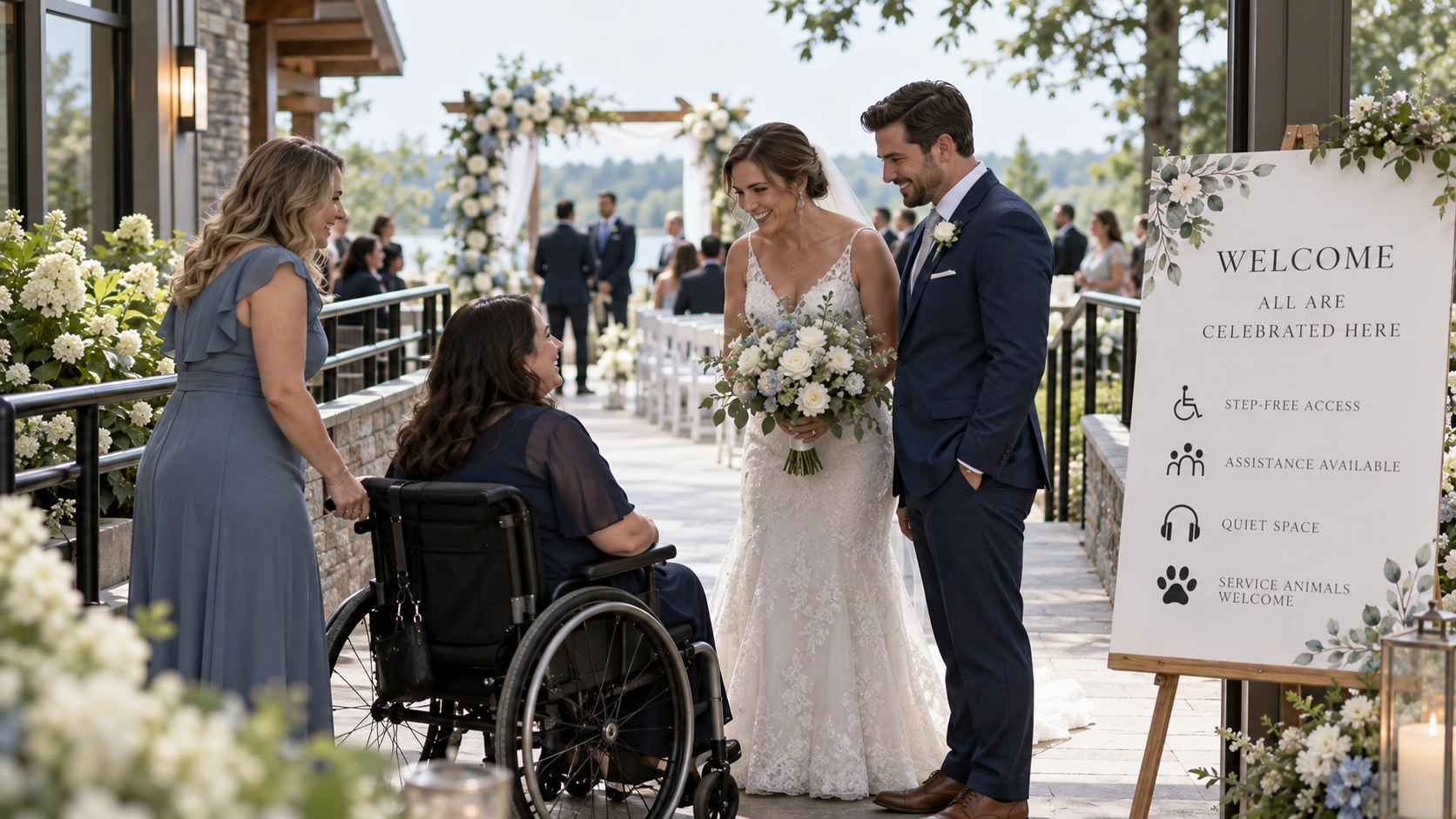
A wedding should be a celebration where every guest can participate comfortably and confidently. For couples planning a wedding, accessible wedding planning means thinking beyond the ceremony and reception to consider how guests move through the venue, access different spaces, receive information, and experience each part of the celebration.
Accessibility is especially important when guests have different mobility, hearing, vision, sensory, or other needs. For weddings in New York and New Jersey, couples may also be working with historic venues, multi-level spaces, city locations, or venues with different accessibility features.
The goal is not to make assumptions about what guests need. It is to create an environment where people can communicate their requirements comfortably and where practical arrangements are considered before the wedding day.
What Does Accessible Wedding Planning Include?
Accessible wedding planning involves identifying potential barriers and making reasonable arrangements so guests can participate in the celebration.
Depending on your guests and venue, this may include:
- Step-free entrances and accessible routes
- Elevators or ramps between different levels
- Accessible restrooms
- Convenient seating
- Clear signage
- Accessible transportation and parking
- Space for mobility devices
- Hearing or visual accommodations
- Quiet areas when appropriate
- Accessible meal and buffet arrangements
- Clear and easy-to-read event information
Accessibility should be considered throughout the guest journey, from arrival at the venue to departure at the end of the celebration.
Start by Understanding Your Guests’ Needs
The most useful first step is communication.
If guests have accessibility requirements, give them a comfortable way to share what would make the wedding easier for them. Avoid assuming that everyone with a particular disability will require the same accommodation.
You can include an accessibility question in your RSVP process, such as asking whether guests require assistance with mobility, seating, transportation, dietary access, or other aspects of the event.
The information can then be used to make practical arrangements while respecting guest privacy.
What Should You Consider When Planning an Accessible Wedding?
Accessibility involves several areas of the wedding experience.
Venue Access
When touring a venue, look beyond the main entrance.
Check how guests reach:
- Ceremony spaces
- Cocktail areas
- Reception rooms
- Restrooms
- Outdoor spaces
- Elevators
- Parking or drop-off areas
An entrance may be accessible while another important part of the venue is not. Walk through the complete guest journey rather than evaluating accessibility based on one feature.
Seating and Space
Think about how guests will move around the ceremony and reception.
Allow sufficient space for mobility devices and consider seating locations that provide a comfortable view without making guests feel separated from everyone else.
If seating is assigned, communicate accessibility requirements to the venue and planning team in advance.
Transportation
If wedding transportation is provided, confirm that the vehicles and pickup arrangements can accommodate guests who require accessible transportation.
Do not assume that a standard shuttle will meet every guest’s needs. Confirm the details with the transportation provider before finalizing the plan.
How Can You Make Wedding Communication More Accessible?
Accessibility also extends to information.
Use Clear Signage
Signs should be easy to identify and positioned where guests can see them without unnecessary searching.
Use clear wording for directions to restrooms, elevators, entrances, transportation pickup points, and other important areas.
Share Information in Advance
Give guests useful information before the wedding rather than expecting them to discover accessibility details on arrival.
Your wedding website or guest guide can explain:
- Accessible entrances
- Parking and drop-off information
- Transportation arrangements
- Venue layout where useful
- Restroom locations
- Contact information for questions
This allows guests to plan their experience.
Coordinate With Vendors
Accessibility requirements should be shared with the relevant vendors. This may include the venue, caterer, transportation provider, entertainment team, photographer, and planning team.
The more clearly the information is communicated, the easier it becomes to avoid preventable problems.
Accessible Wedding Ideas for Different Parts of the Celebration
Accessibility should be considered across the entire wedding rather than added as a final checklist item.
Ceremony
Consider accessible seating, clear sightlines, appropriate aisle space, and an accessible route to the ceremony area.
If the ceremony involves readings, music, or other presentations, consider how guests with different communication needs will experience them.
Reception
Think about table spacing, accessible routes between tables, restroom access, and how guests will reach food and beverage stations.
If a buffet is part of the reception, consider whether every guest can comfortably access it or whether assistance should be available.
Entertainment
Discuss accessibility with the entertainment team. Consider volume levels, lighting effects, seating arrangements, and how guests will access the dance floor or other entertainment areas.
Outdoor Events
For outdoor ceremonies, cocktail hours, or welcome parties, check the surfaces and routes guests will need to navigate. Grass, gravel, uneven paths, or steep areas may create challenges for some guests.
What We Observe: The Route Matters as Much as the Room
At White Wave Events, we find that couples often confirm whether a venue is “accessible” without walking through the complete experience a guest will have.
A guest may be able to enter the building easily but encounter a difficult route to the ceremony, cocktail hour, restroom, or reception space.
We recommend physically reviewing the full guest journey with the venue team. Look at entrances, elevators, restrooms, seating, transportation drop-offs, and transitions between spaces.
It is also useful to communicate accessibility requirements to vendors early. Last-minute changes can be much harder when layouts, rentals, transportation, and seating arrangements have already been finalized.
Balancing Accessibility With the Wedding Design
Accessibility does not mean sacrificing the visual or experiential elements of a wedding.
Thoughtful layouts can incorporate accessible routes while maintaining the overall design. Seating, signage, lighting, décor, and transportation can all be planned with accessibility in mind from the beginning.
In fact, considering accessibility early can make the entire event easier to navigate for everyone, including older guests, families with young children, and guests who may simply appreciate clearer directions and comfortable spaces.
The best accessibility planning is often integrated into the wedding design rather than added afterward.
How Can Professional Wedding Planning Services Help?
Accessibility involves coordination across several parts of the wedding.
Wedding planner services can help couples identify logistical considerations early, communicate requirements with vendors, review venue layouts, and incorporate accessibility into the broader wedding timeline.
A full-service wedding planner can also help coordinate accessibility alongside venue selection, transportation, rentals, catering, entertainment, guest communication, and design.
This allows couples to address practical requirements without having to personally manage every vendor conversation.
Create a Celebration Where Everyone Can Participate
Accessible wedding planning is ultimately about creating an environment where guests feel considered rather than accommodated as an afterthought.
Ask what guests need, understand the venue thoroughly, communicate requirements early, and build accessibility into the layout and timeline from the beginning.
Small details can make a meaningful difference, especially when they allow guests to participate comfortably without drawing unnecessary attention to their needs.
Final Thoughts
An accessible wedding starts with thoughtful planning. Review the complete guest journey, communicate with guests, evaluate the venue, confirm transportation, and coordinate accessibility requirements with your vendors.
When these details are addressed early, accessibility becomes a natural part of the wedding experience rather than a last-minute adjustment.
Planning a Wedding With Every Guest in Mind?
White Wave Events helps couples coordinate the many details that shape a thoughtful wedding experience, from venue logistics and design to vendor coordination and guest planning.
If you are looking for a wedding planner in New York to help create a celebration that feels seamless, welcoming, and personal, connect with White Wave Events to begin planning.
Frequently Asked Questions
Q1. What is accessible wedding planning?
A. Accessible wedding planning means identifying and reducing barriers that may prevent guests from comfortably participating in the wedding. This can include venue access, seating, transportation, restrooms, communication, and event layouts.
Q2. How do I know if my wedding venue is accessible?
A. Review the complete guest journey, including entrances, ceremony and reception spaces, restrooms, elevators, outdoor areas, parking, and transportation access. Ask the venue specific questions rather than relying only on a general accessibility statement.
Q3. How can guests communicate accessibility needs?
A. Include an optional accessibility question in your RSVP process and provide a clear contact method for guests who would prefer to discuss their requirements privately.
Q4. Should wedding transportation be accessible?
A. If guests require accessible transportation, confirm the vehicle’s capabilities and pickup arrangements with the transportation provider in advance rather than assuming standard wedding transportation will meet their needs.
Q5. Can a wedding planner help with accessibility?
A. Yes. A wedding planner can help coordinate accessibility considerations with the venue, transportation providers, caterers, rental companies, entertainment teams, and other vendors as part of the overall wedding plan.