

Planning a South Asian wedding in New Jersey often means bringing together multiple ceremonies, family traditions, cultural details, and celebrations across several days. Unlike a single-day wedding, a multi-day celebration requires the entire experience to work as one connected timeline while still giving each event its own identity.
New Jersey also offers practical advantages for couples hosting large or multi-event celebrations, from a wide range of wedding venues and accommodations to convenient access for guests traveling from New York and beyond. With the right planning approach, couples can create a wedding weekend that feels culturally meaningful without becoming overwhelming for themselves or their guests.
How Do You Plan a Multi-Day South Asian Wedding in New Jersey?
Start by mapping the entire wedding celebration before planning individual events. List each ceremony or gathering, determine its purpose, estimate the guest count, and establish how the events connect to one another.
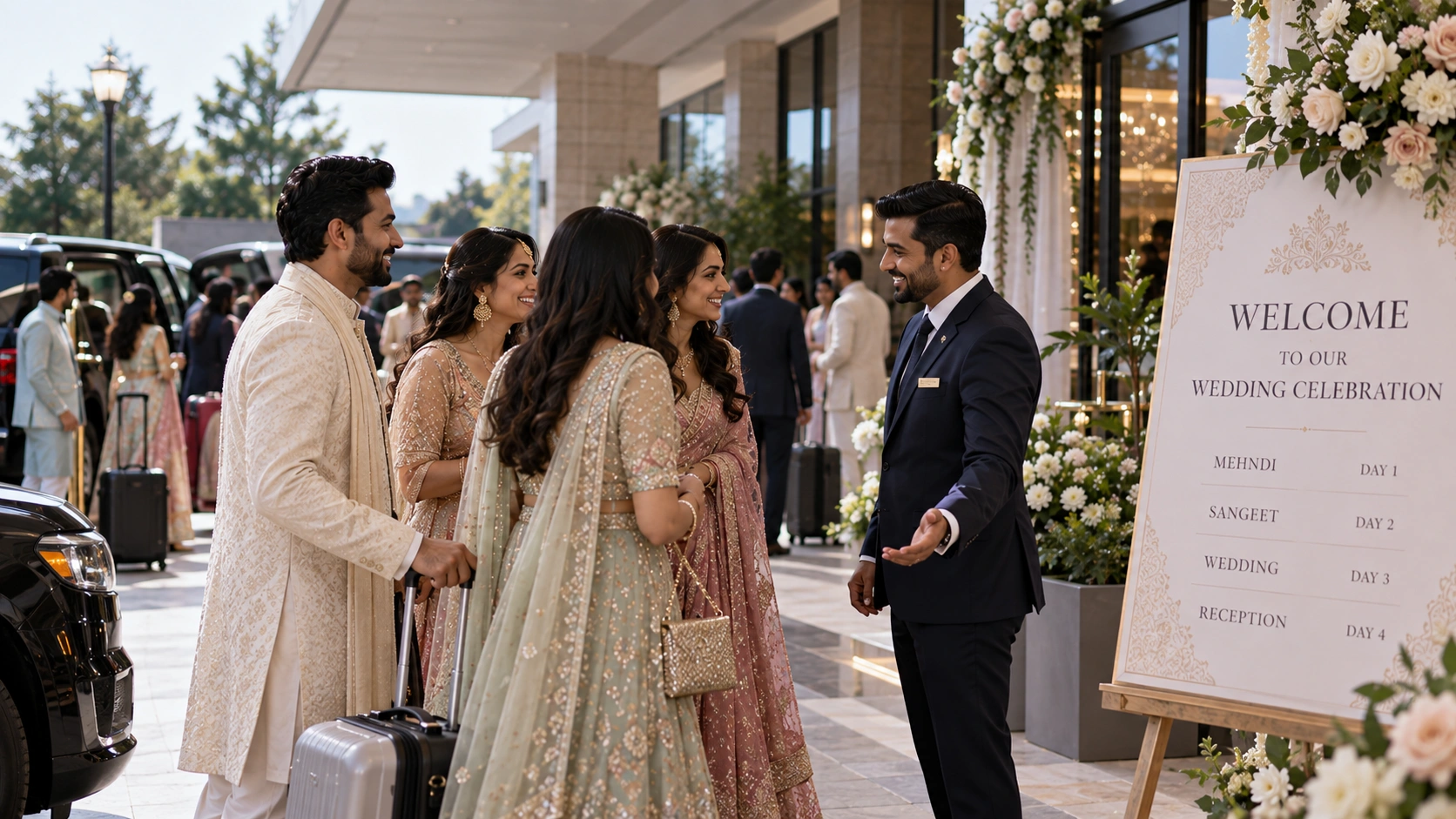
A typical multi-day celebration might include:
- Welcome or family gathering
- Mehndi or henna celebration
- Sangeet or music-focused evening
- Wedding ceremony
- Reception
- Farewell brunch
Not every wedding needs all of these events. The goal is to build a schedule that reflects your traditions, family preferences, and the experience you want your guests to have.
Once the events are established, consider the venue, transportation, accommodations, catering, décor, entertainment, attire changes, and vendor schedules across the entire celebration rather than treating each event separately.
What Makes South Asian Wedding Planning Different?
The complexity often comes from coordination rather than from any single ceremony. Multiple events can involve different setups, vendors, menus, décor concepts, guest lists, and timelines.
A strong planning strategy should therefore balance tradition, logistics, and guest experience.
For example, a ceremony may require a specific setup and timeline, while the reception may need a complete transformation of the same space. If both events take place at the same venue, the transition needs to be planned well in advance.
The same applies to attire. When couples have multiple outfit changes, the timeline should account for changing, photography, hair and makeup, and travel between locations.
Key Challenges to Plan For
Coordinating Multiple Venues
Using different venues can give each celebration its own atmosphere, but it also introduces transportation and scheduling considerations.
Before confirming venues, consider the distance between locations, parking, guest accommodations, setup requirements, and how vendors will move between events.
Managing Event Transitions
A multi-day wedding involves more than planning each event individually. The transition from one celebration to the next also matters.
Create a master timeline that tracks:
- Vendor arrival and setup
- Décor installation and breakdown
- Catering schedules
- Entertainment
- Couple’s preparation
- Photography and videography
- Guest transportation
- Venue access and departure times
This helps prevent one delayed event from creating problems for the following celebration.
Keeping Guests Comfortable
Guests may be attending several events over multiple days, sometimes while traveling from another state or country.
Provide clear information about event timings, dress expectations, locations, transportation, and nearby accommodations. A simple digital itinerary or wedding website can help guests understand what to expect throughout the weekend.
How Can You Make a Multi-Day Wedding Feel Cohesive?
Give every event its own personality while maintaining a few visual or experiential elements throughout the celebration.
For example, you could carry a similar color family, floral style, stationery detail, or design element across the weekend while changing the décor and atmosphere for each event.
You can also create continuity through the guest experience. Consistent communication, thoughtful transitions, coordinated transportation, and clear schedules can make several separate celebrations feel like one thoughtfully designed wedding journey.
Planning the Key Elements of a South Asian Wedding
Ceremonies and Traditions
Determine which traditions are essential to the couple and families before building the timeline. Discuss ceremony requirements, cultural details, family participation, and venue considerations early in the planning process.
Food and Catering
Food can be an important part of a South Asian wedding experience. Discuss menus, dietary requirements, service style, late-night food, and whether different events require different menus.
For multiple celebrations, consider how the food experience can change from one event to another instead of repeating the same format throughout the weekend.
Décor and Design
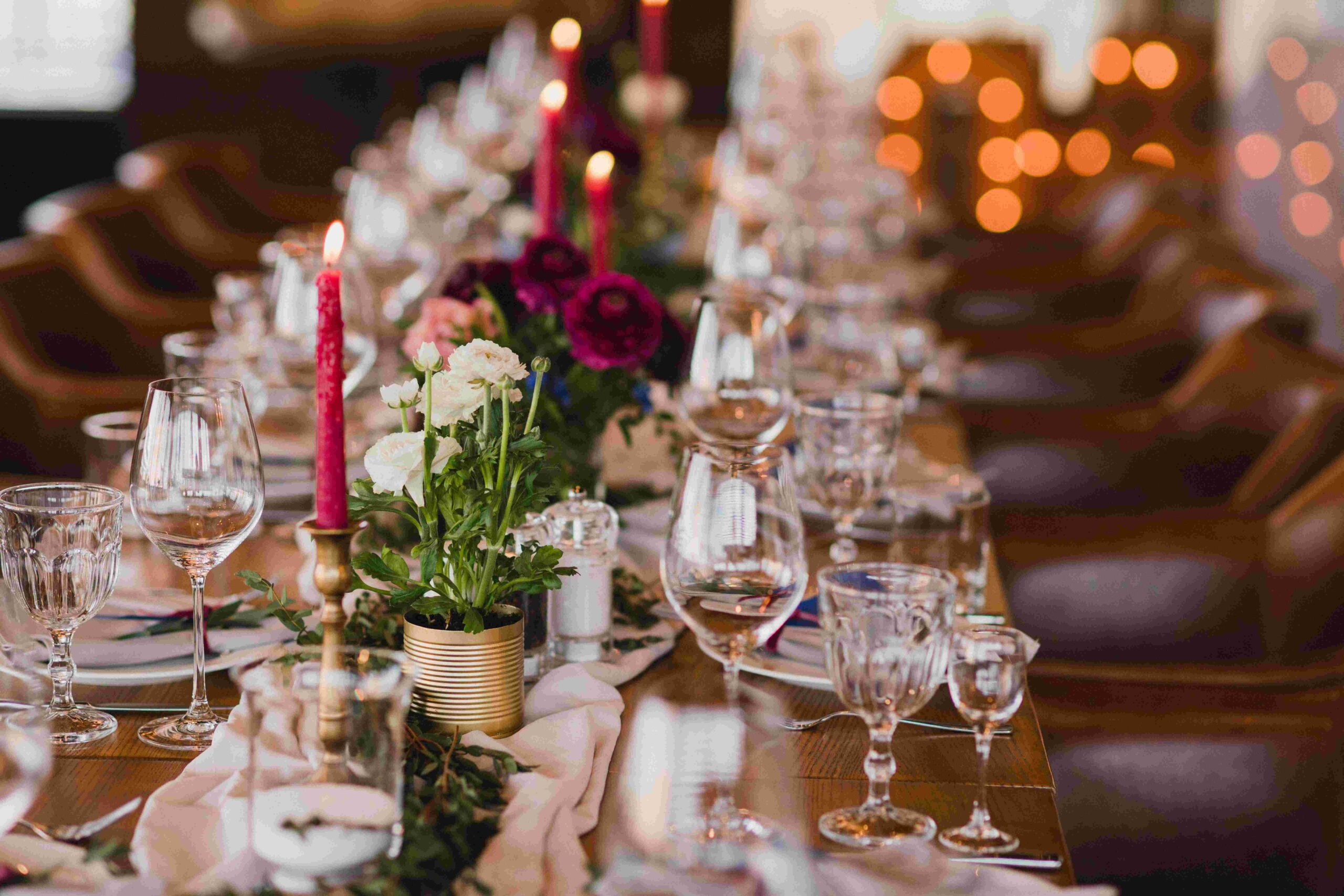
Décor can help distinguish each event while creating a cohesive wedding aesthetic.
A daytime ceremony might have a lighter design direction, while a Sangeet or reception can feature a more energetic atmosphere. Discuss installation time, breakdown requirements, venue restrictions, and whether décor elements can be repurposed between events.
Attire and Beauty
Multiple outfits often require careful scheduling. Build realistic time into the timeline for hair, makeup, changing, photography, and transportation.
If events take place at different locations, allow additional buffer time rather than planning each transition too tightly.
Entertainment
Entertainment should match the purpose and energy of each celebration. A music-focused evening may have a different format from the ceremony or reception.
Confirm performance requirements, sound needs, setup times, and venue restrictions early so entertainment does not conflict with other vendors or venue logistics.
What We Observe When Planning Multi-Day Weddings
At White Wave Events, one of the most important planning considerations is looking beyond the individual events.
Couples naturally focus on the ceremony, reception, décor, attire, and entertainment. However, smaller logistical details can have a major effect on how smoothly the entire celebration feels.
Vendor movement, setup windows, transportation, outfit changes, guest communication, and the time needed to reset a venue all need to be considered as part of one master plan.
The most successful multi-day celebrations are not necessarily the ones with the most events. They are the ones where every event has a clear purpose and the entire weekend feels intentional.
How Do You Balance Tradition With a Modern Wedding Experience?
Modern South Asian weddings can preserve meaningful traditions while adapting the format to suit the couple.
You might choose to keep a traditional ceremony while using a contemporary reception design, introduce modern entertainment alongside cultural performances, or simplify certain events to give guests more time to relax.
The key is deciding which traditions matter most to you rather than trying to include everything simply because it has always been part of a wedding.
This approach can make the celebration feel personal instead of overly structured.
How Can a Wedding Planner Help With a Multi-Day South Asian Wedding?
A multi-day celebration requires coordination across people, locations, vendors, timelines, and guest needs.
Working with an experienced wedding planner can help couples build the master timeline, identify potential scheduling conflicts, coordinate vendors, and keep the individual events connected.
For couples planning in New Jersey, local knowledge can also be useful when considering venue logistics, transportation, accommodations, and the practical requirements of hosting several celebrations in the area.
Make the Celebration Feel Like Yours
A South Asian wedding does not have to follow one fixed formula. Your celebration can include the traditions that hold meaning for your family while creating a wedding weekend that reflects your personalities and priorities.
Start with the experience you want your guests to have, then build the ceremonies, venues, design, food, entertainment, and logistics around that vision.
Final Thoughts
Planning a South Asian wedding in New Jersey requires more than organizing individual ceremonies. It involves creating one connected experience across several days.
With a clear master timeline, thoughtful venue selection, realistic transitions, strong guest communication, and intentional design, couples can create a multi-day celebration that feels organized, personal, and culturally meaningful.
Planning a South Asian Wedding in New Jersey?
If you are planning a multi-day celebration and need help coordinating the details, White Wave Events can help you bring the different elements of your wedding experience together. Connect with our team to discuss your plans and explore how an experienced South Asian wedding planner in New Jersey can support your celebration.
FAQs
Q1. How many days does a South Asian wedding usually take?
A. There is no fixed number of days. Some couples host several celebrations across a weekend, while others choose fewer events based on their traditions, guest list, and priorities.
Q2. How early should you start planning a South Asian wedding in New Jersey?
A. Start as early as possible, particularly when you are coordinating multiple events, venues, guest accommodations, and vendors. An earlier start gives you more flexibility when building the overall timeline.
Q3. Can multiple South Asian wedding events be held at one venue?
A. Yes. Holding multiple events at one venue can simplify guest transportation and logistics, although the timeline must account for room transitions, décor changes, vendor setup, and venue access.
Q4. Do I need a wedding planner for a multi-day South Asian wedding?
A. A planner can be particularly helpful when several events, vendors, locations, and timelines need to be coordinated. The level of planning support depends on the complexity of your celebration.
Q5. Can a South Asian wedding incorporate modern wedding trends?
A. Absolutely. Couples can preserve meaningful cultural traditions while incorporating contemporary décor, entertainment, food presentation, photography, and reception experiences.