


Guests see a bride walking down the aisle, the first dance, and the cake cutting. What they do not see is everything happening behind those moments, and that is where the real work begins.
A wedding planner’s role goes far beyond arranging décor or managing a timeline. It involves coordinating vendors, solving unexpected challenges, managing logistics, and ensuring the couple can fully enjoy their wedding day without worrying about the details happening around them.
The Day Starts Long Before the Wedding Ceremony

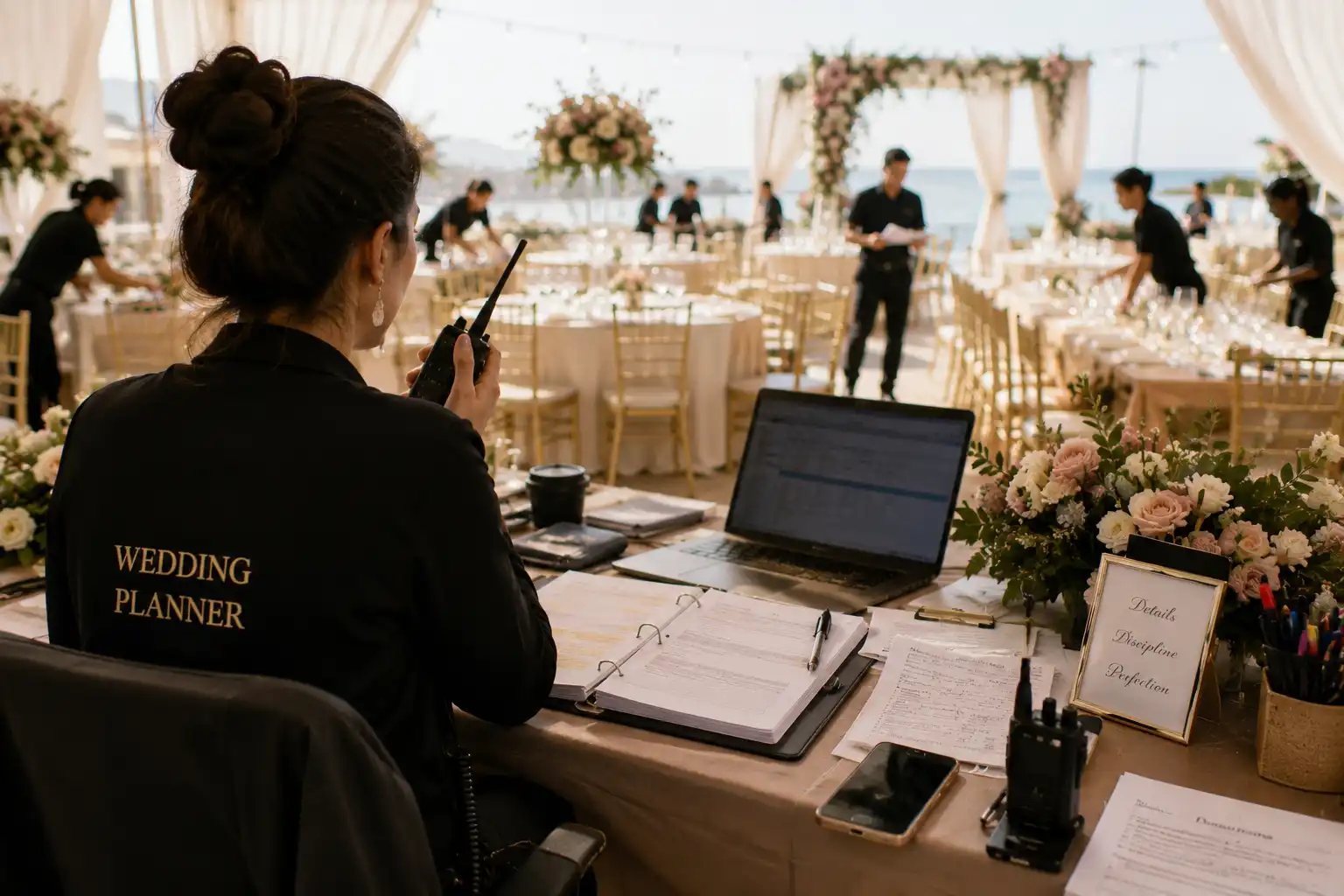
By the time a single guest arrives, the planning team has usually been on-site for hours. Every vendor arrival is checked against the timeline, including florals, rentals, catering, entertainment, and décor teams.
The team walks through the décor installation in person rather than relying only on text confirmations. Last-minute changes, delayed deliveries, seating adjustments, or weather decisions for outdoor moments are handled before the couple ever needs to know about them.
A wedding planner’s job begins before guests arrive because the goal is to create a smooth experience where every detail feels effortless.
What Does a Wedding Planner Do on the Wedding Day?
A wedding planner manages everything needed so the couple can be fully present in their own day instead of managing the event themselves.
This includes full vendor, venue, and guest coordination from the morning through the end of the night. It also involves overseeing décor details, from smaller tablescape touches to larger installations, while ensuring everything follows the approved timeline.
Wedding planners also work closely with photographers, videographers, DJs, and bands to make sure each part of the celebration flows as planned. Behind the scenes, they handle countless small details that guests rarely notice, such as resolving a seating mix-up, answering vendor questions, or making quick adjustments without involving the couple.
The goal is simple: create a celebration where the couple can enjoy every moment instead of worrying about what happens next.
When Should You Hire a Wedding Planner?
Many couples start looking for a wedding planner later than they should. Popular dates, venues, and experienced vendors can become unavailable quickly, especially for destination celebrations.
As a general guide, local weddings often benefit from booking a planner 9 to 12 months ahead. Destination weddings may require 12 to 18 months or more, depending on the location, venue availability, and level of planning involved.
Smaller celebrations may require less planning time, often around 3 to 6 months depending on the complexity of the event.
Bringing a planner in early protects more than the wedding day itself. It helps manage the months of decisions, vendor conversations, and timeline planning that lead up to the celebration.
What Is the Difference Between a Wedding Planner and a Wedding Coordinator?
This is one of the most common questions couples ask, and understanding the difference helps them choose the right support.
A full-service wedding planner is involved throughout the entire planning journey. This can include venue and vendor selection, design concepts, budget management, logistics, and overall event planning from the beginning.
A wedding coordinator usually steps in closer to the wedding date. They help execute an existing plan, manage the wedding day, and ensure that vendors, schedules, and details come together smoothly.
There is also a middle ground with partial planning. This option works well for couples who want to handle certain parts themselves while getting professional support with specific areas of the celebration.
The right choice depends on how much of the planning process couples want to manage personally and how much guidance they need.
How Do Wedding Planners Handle Last-Minute Wedding Issues?
Unexpected situations are part of every wedding, but a good planning team ensures they do not become the couple’s responsibility.
A vendor may arrive late, weather conditions may affect an outdoor ceremony, or a seating concern may appear on the wedding morning. A planner’s role is to manage these situations calmly, find solutions quickly, and keep the celebration moving forward.
Many couples appreciate that experienced planners resolve unexpected challenges without involving or adding stress for them. The couple should be able to focus on celebrating rather than managing problems behind the scenes.
No planner can prevent every surprise. A great planner ensures that challenges are handled smoothly and professionally.
Is Hiring a Wedding Planner Worth the Investment?
For many couples, hiring a wedding planner provides value throughout the entire planning journey, not just on the wedding day.
The support appears through vendor coordination, timeline creation, decision-making, and managing the many details involved in bringing a celebration together. On the wedding day itself, that value becomes even clearer when unexpected situations require immediate attention.
Many couples who work with a full-service planner describe a similar experience: they are able to enjoy their wedding instead of managing it from the sidelines.
A wedding planner allows couples to experience the moments they spent months preparing for while trusting that the details are being handled.
What Happens After the Wedding Reception Ends?
The job does not end when the reception is over. The planning team stays involved through the final stages of the celebration, including coordinating breakdown, assisting with final vendor settlements, and managing closing details that couples may overlook after the event.
Guests rarely see this part of the process, but it is just as important as everything that happens during the ceremony and reception.
The final details ensure that the celebration concludes smoothly and that vendors, spaces, and arrangements are properly wrapped up.
What Does a Wedding Planner Really Add to Your Celebration?
A wedding planner’s real work happens in the spaces between the moments guests remember. It is the vendor call before sunrise, the timeline adjustment during the reception, the quiet solution to an unexpected issue, and the final details handled after everyone has gone home.
The best planning is often invisible because everything feels effortless.
From vendor coordination and wedding day management to behind-the-scenes problem solving, a wedding planner helps create an experience where couples can focus on what matters most: celebrating their special day.
Curious what a day with our team would actually look like for your wedding? Book a free discovery call, and we’ll walk you through it.
Schedule a consultation with White Wave Events, and let us help you navigate vendor contracts, planning decisions, and every detail leading up to your wedding day.
Frequently Asked Questions
Q1. What does a wedding planner do on the wedding day?
A. A wedding planner manages vendors, timelines, guest coordination, décor details, and unexpected issues throughout the event. Their role is to ensure everything runs smoothly so the couple can enjoy their celebration without managing logistics.
Q2. When is the right time to hire a wedding planner?
A. Local weddings typically benefit from hiring a planner 9 to 12 months in advance, while destination weddings may require 12 to 18 months or more. Booking early provides more flexibility with venues, vendors, and planning decisions.
Q3. What is the difference between a wedding planner and a wedding coordinator?
A. A wedding planner supports couples throughout the entire planning process, including vendor selection, design, budget management, and logistics. A wedding coordinator usually steps in closer to the wedding date to manage the existing plan and oversee the event day.
Q4. How does a wedding planner handle last-minute wedding problems?
A. A wedding planner manages unexpected situations such as vendor delays, weather changes, or seating concerns by finding solutions quickly and keeping the celebration on track. Their goal is to handle challenges without adding stress for the couple.
Q5. Is hiring a wedding planner worth the investment?
A. Hiring a wedding planner can provide value through vendor coordination, timeline management, decision support, and handling details before and during the wedding. It allows couples to enjoy their celebration instead of managing the event from the sidelines.