

You are standing at the altar, emotions are running high, and your guests are hanging on every word. Many couples love the idea of writing their own vows but feel unsure where to start. What should you say? How personal is too personal? And how do you make it sound heartfelt rather than rehearsed? Writing your own vows is not about being perfect; it is about being authentic. This guide walks you through writing your wedding vows step by step, with tips, common pitfalls to avoid and how your vows fit into your wider wedding planning and the flow of your ceremony.
What Are Wedding Vows?
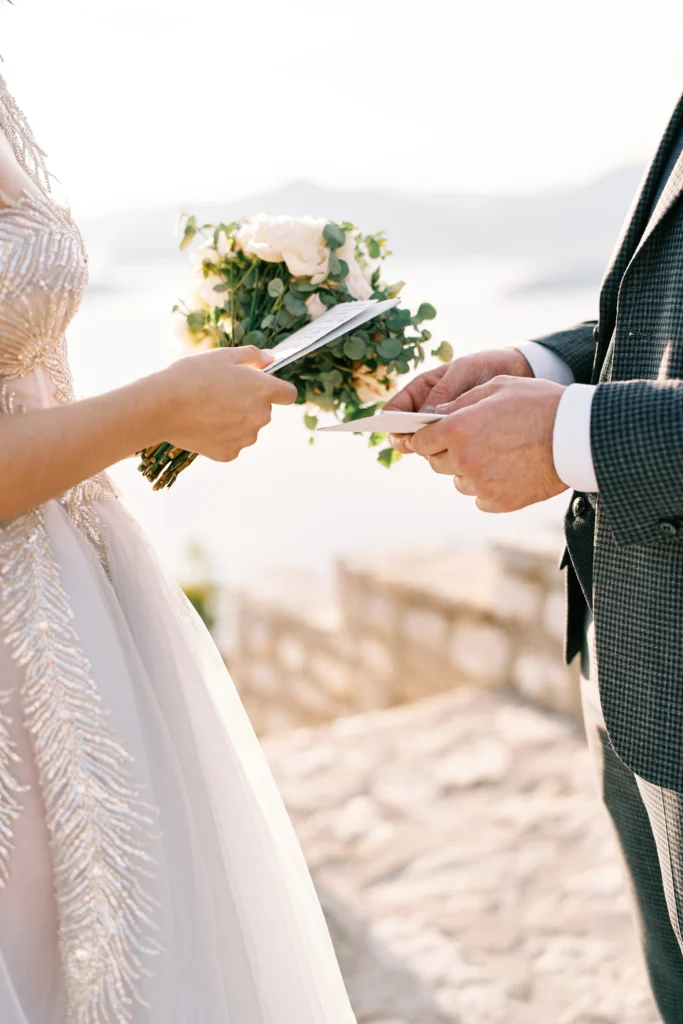
Wedding vows are the personal promises partners make to each other when they marry. They express love, shared values and intentions for the life ahead.
Traditional vows follow a set wording. Today, many couples choose to personalize them to reflect their own story.
Personal vows usually include:
- Reflections on your relationship
- Promises for the future
- Heartfelt expressions of commitment
They are one of the emotional anchors of the ceremony, alongside rituals, readings and symbolic items such as ceremony favors.
Why Write Your Own Wedding Vows?
Personal vows make your ceremony more moving and memorable.
Emotional Connection
Writing your own vows lets you speak from the heart and creates a more intimate moment.
Meaningful Memories
Personal vows are often the most memorable part of the ceremony, for you and your guests.
Reflects Your Journey
Your vows can draw on the values you share, how you have grown and the life you are building together.
Fits Modern Wedding Styles
Personal vows suit modern ceremonies that focus on individuality rather than formality.
Enhances the Ceremony Flow
Well-written vows create a natural emotional build that carries guests into the celebration that follows.
The Building Blocks of Great Wedding Vows
Great vows do not need to be long; they need to be heartfelt.
Key components include:
- A reflection on your relationship
- What you love and admire about your partner
- Specific promises you intend to keep
- A closing statement of commitment
This simple structure gives your vows shape without limiting what you want to say.
How to Write Your Wedding Vows, Step by Step
- Look Back at Your Relationship
Think about the key moments, challenges and growth you have shared. - Write Freely First
Do not edit yet. Write honestly and let emotion guide your first draft. - Choose Two or Three Promises
Keep them realistic and meaningful rather than performative. - Keep It Balanced
Aim for 60 to 90 seconds when read aloud, so the ceremony keeps flowing. - Edit for Clarity
Remove inside jokes or complicated wording that guests may not follow. - Practice Aloud
Reading your vows out loud helps you refine the tone and timing.
Writing your vows fits naturally alongside other ceremony tasks, such as choosing readings and music.
Common Mistakes to Avoid
Even heartfelt vows can fall flat if you fall into these traps:
- Turning your vows into a long speech or story
- Relying on inside jokes that leave guests out
- Making promises that are vague or unrealistic
- Writing vows that run far too long
- Comparing your partner to anyone else
Simple, sincere words always land better than dramatic ones.
Trends in Modern Wedding Vows
As weddings evolve, so do wedding vows.
Popular trends include:
- Shorter, more focused vows
- Couples writing their vows together
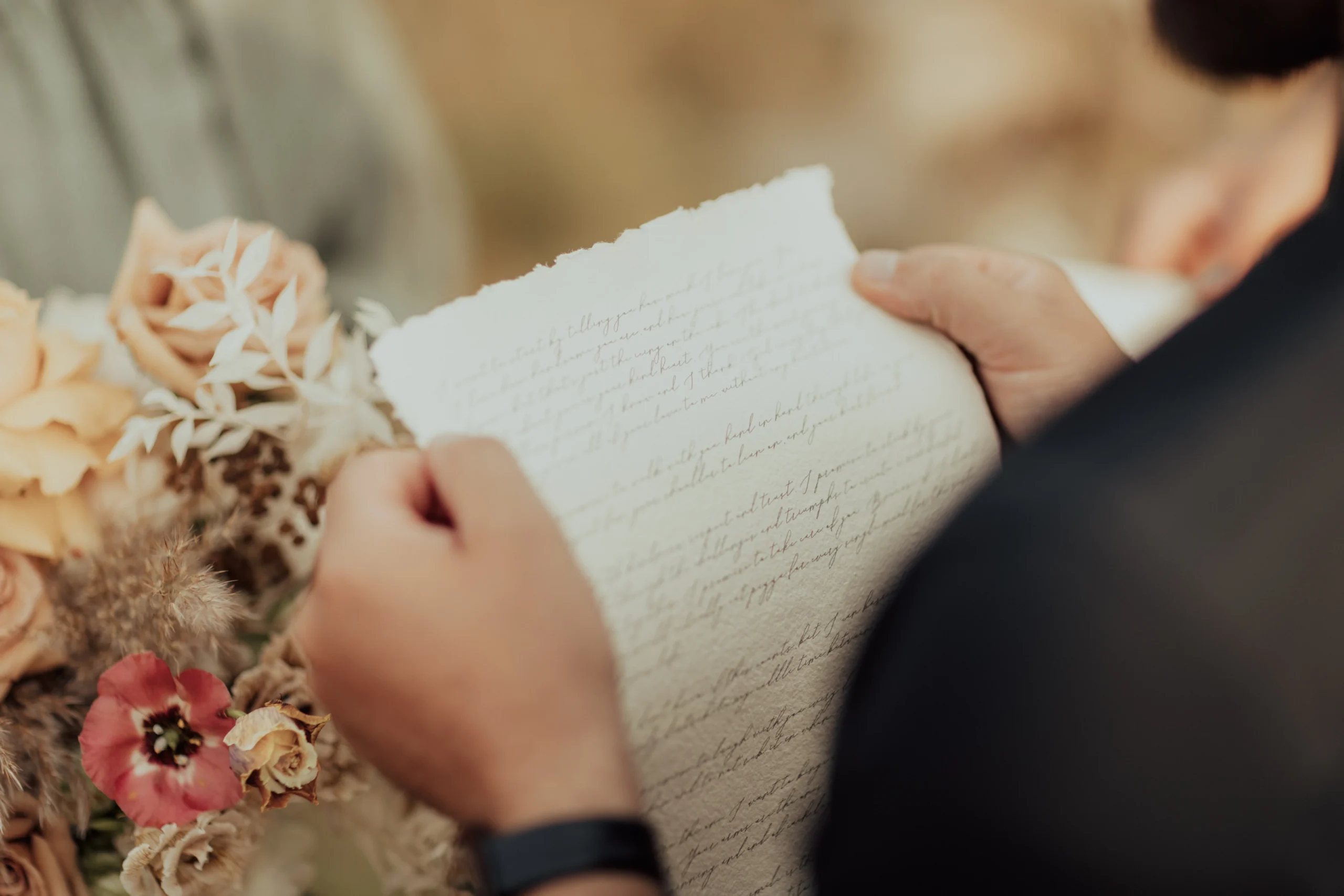
- Writing vows privately and exchanging them as letters
- Weaving in cultural or family traditions
- Connecting vows with the ceremony design and favors for a cohesive experience
Across all of these, authenticity matters more than performance.
Need Help Designing the Right Ceremony?
Writing your vows is just one part of creating a meaningful ceremony. If you would like help planning the ceremony, deciding when to share your vows and fitting them into your overall schedule, our team can help you create a ceremony that feels natural and deeply personal.
Conclusion
Writing your own wedding vows is a chance to pause and reflect on the commitment you are about to make. There is no right or wrong, only what is true to you. Thoughtfully written vows become the heart of your ceremony and set the tone for everything that follows. The best approach is to give yourself time, avoid the common pitfalls, and add your vows to your overall wedding planning list so you can draft words that feel lasting and true. Trust your own voice, and remember that your vows do not need to impress anyone except the person standing in front of you.
Follow White Wave Events on Instagram and Facebook for daily inspiration, expert planning tips and behind-the-scenes looks at the celebrations we plan.
FAQs
How long should wedding vows be?
Around 60 to 90 seconds is ideal. That keeps the ceremony engaging while leaving room for meaningful promises.
Should we write our vows together or separately?
Many couples write separately to keep their words personal, but agreeing on length and tone in advance helps keep the ceremony balanced.
Can wedding vows be light and funny?
Yes, as long as humor does not replace sincerity. Light humor works best alongside genuine promises.
When should we write our vows?
A few weeks before the wedding, once the major planning tasks are done, gives you time to write calmly without rushing.
Can personal vows replace traditional vows?
Personal vows can replace or sit alongside traditional vows, depending on your ceremony and your officiant’s guidance.