


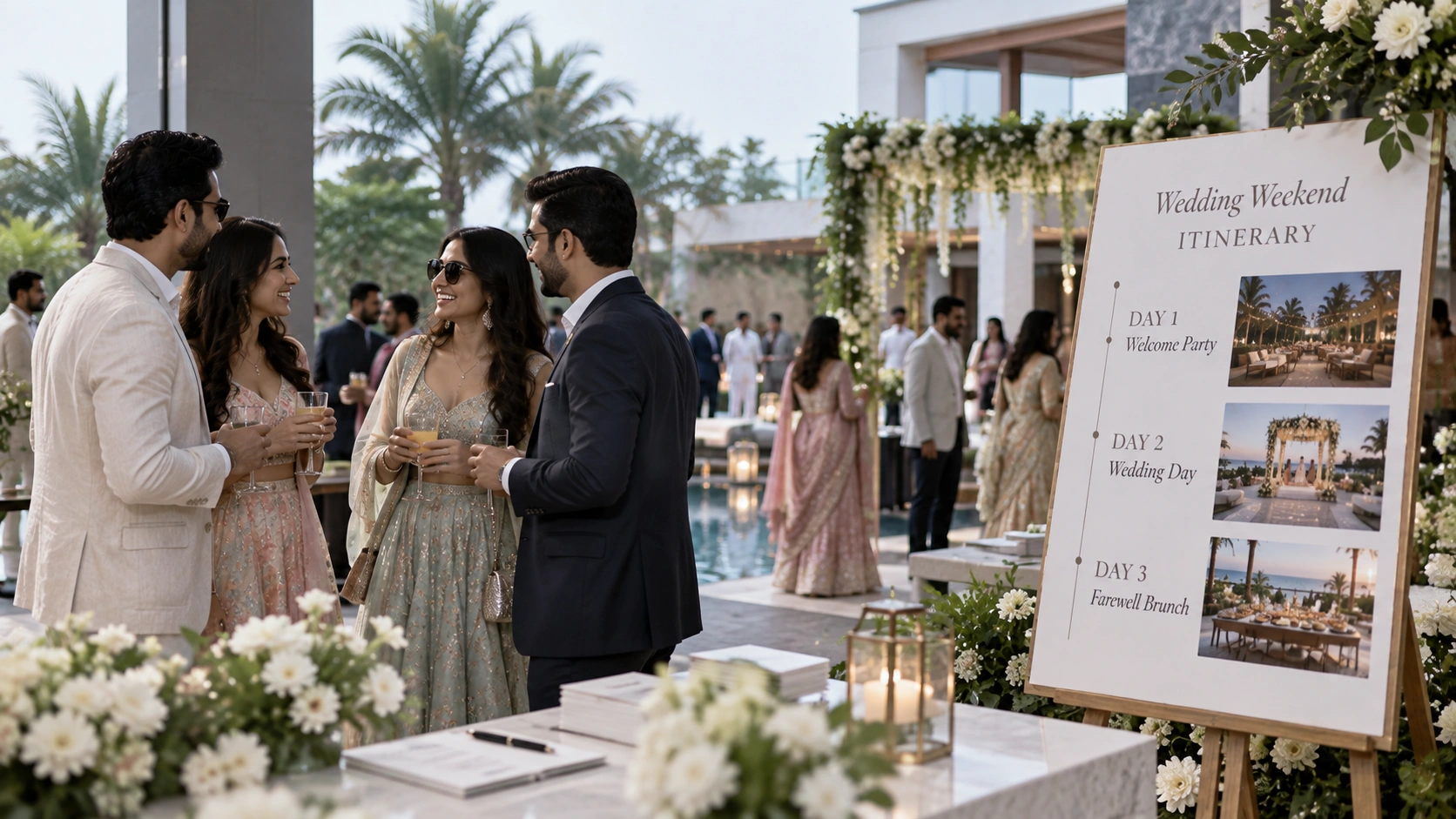
A wedding can be more than a single day. For couples hosting guests from different cities, states, or countries, a wedding weekend creates an opportunity to turn the celebration into a complete experience. A well-planned wedding weekend itinerary can bring together the welcome party, wedding day, and farewell brunch while giving guests enough time to settle in, celebrate, and enjoy the destination.
Planning several events also introduces more moving parts. Guests may arrive at different times, transportation needs to be coordinated, and each event needs its own schedule, vendors, and guest communication. For weddings in New York and New Jersey, couples may also be working with multiple venues or locations across a broader area.
The key is to create an itinerary that feels organized without making the entire weekend feel overly scheduled.
What Should a Wedding Weekend Itinerary Include?
A wedding weekend itinerary should give guests a clear understanding of what is happening, where they need to be, and when they need to arrive.
A typical three-event itinerary can include:
- Welcome party: An informal gathering where guests can meet and connect before the wedding.
- Wedding day: The main celebration, including the ceremony, cocktail hour, reception, and other planned events.
- Farewell brunch: A relaxed gathering that gives couples and guests one final opportunity to spend time together.
Depending on the wedding, you may also include rehearsal events, cultural ceremonies, guest activities, transportation windows, or an after-party.
The itinerary should provide structure while leaving enough breathing room for guests to enjoy themselves.
Start With the Guest Experience
Before filling the weekend with events, consider what your guests are actually experiencing.
Some guests may be traveling long distances and need time to check into their hotels. Others may arrive earlier and want to explore the area. If every part of the weekend is mandatory, guests may feel as though they are following a schedule rather than attending a celebration.
Think about:
- When guests are arriving
- Where they are staying
- How they will travel between events
- Which events are essential
- Which activities are optional
- How much downtime guests need
A strong itinerary should make participation easy without making every hour feel accounted for.
How Do You Plan Each Part of the Wedding Weekend?
Breaking the weekend into individual events makes the planning process easier.
Welcome Party
The welcome party sets the tone for the weekend. It can be a casual dinner, cocktail gathering, or another format that allows guests to meet before the wedding.
Keep the schedule relaxed enough for guests who are arriving throughout the day. If many guests are traveling, avoid making the welcome event so formal that late arrivals feel disruptive.
Wedding Day
The wedding day requires the most detailed timeline.
Include the ceremony, cocktail hour, reception, meal service, speeches, special dances, entertainment, and other key moments. Transportation between hotels and venues should also be coordinated with this timeline.
While guests may only see the final schedule, the planning team needs to account for vendor arrival times, setup, photography, catering, entertainment, and transitions.
Farewell Brunch
A farewell brunch provides a natural conclusion to the wedding weekend.
It does not need to be as structured as the wedding day. A relaxed breakfast or brunch can give guests the chance to reconnect, share memories, and say goodbye before traveling home.
Keep the timing practical, particularly if guests have flights or long drives later that day.
What Are the Biggest Wedding Weekend Planning Considerations?
Several details become more important when multiple events are involved.
Build Realistic Timelines
Avoid scheduling events too close together. Guests need time to travel, change, rest, and prepare.
A welcome party that ends late the night before an early wedding-related activity may create unnecessary pressure. Similarly, a farewell brunch should allow guests enough time to check out and travel afterward.
Coordinate Transportation
If events take place at different locations, make transportation part of the itinerary from the beginning.
Guests should know where to meet, when transportation departs, and how they will return. If transportation is only provided for certain events, make that clear in the guest communication.
Communicate What Is Optional
Not every event needs to be mandatory. Clearly identify optional activities so guests can choose how they spend their free time.
This is particularly helpful when hosting a destination-style wedding weekend.
How Can You Make a Wedding Weekend Itinerary Easier for Guests?
A good itinerary is useful only if guests can easily understand it.
Create a Central Information Hub
A wedding website or digital guest guide can bring together:
- Event dates and times
- Venue addresses
- Dress codes
- Hotel information
- Transportation details
- RSVP information
- Optional activities
- Important contact details
Guests should not have to search through multiple messages to find basic information.
Keep Each Event Clearly Defined
Give every event its own time, location, dress code, and expectations.
For example:
Friday: Welcome Party
Saturday: Wedding Ceremony & Reception
Sunday: Farewell Brunch
This simple structure makes the weekend easier to follow.
Leave Space for Downtime
An itinerary does not have to fill every available hour. Leaving open periods allows guests to rest, explore, spend time with family, or simply prepare for the next event.
Wedding Weekend Itinerary Ideas That Feel Personal
The best itineraries reflect the couple rather than following a fixed formula.
You might include:
- A casual welcome dinner featuring food meaningful to your families
- A local activity for out-of-town guests
- A cultural gathering before the wedding
- A relaxed morning between wedding events
- A post-reception after-party
- A farewell brunch with a favorite breakfast or brunch theme
The format should reflect the kind of experience you want your guests to have.
What We Observe: The Gaps Between Events Matter
At White Wave Events, we find that couples naturally focus on the main events but can sometimes overlook what happens between them.
The transition from a hotel to a welcome party, from the ceremony to the reception, or from the reception to the next morning can involve transportation, guest communication, vendor timing, and changes of attire.
We recommend looking at the entire weekend as one connected timeline rather than three separate events.
It is also helpful to identify who guests can contact when they have questions. The couple should not become the weekend’s information desk. Clear communication and assigned coordination allow the couple to remain present and enjoy their celebration.
Balancing a Full Weekend With Time to Enjoy It
A wedding weekend can offer more opportunities to celebrate, but more events do not automatically create a better experience.
Modern couples are increasingly personalizing wedding weekends around what feels meaningful to them. That could mean a large welcome party, a small dinner, an optional guest activity, or simply more free time between the main events.
Think about quality rather than quantity. A few thoughtfully planned experiences can feel more memorable than a packed itinerary.
How Can a Wedding Planner Help Plan a Wedding Weekend?
Coordinating several wedding events requires a clear view of the entire weekend.
A full-service wedding planner can help bring together venues, vendors, transportation, guest communication, timelines, and event design across multiple celebrations.
For couples hosting a destination-style wedding weekend, a destination wedding planner can also help coordinate the experience beyond the wedding day itself, including guest logistics and multiple event schedules.
Professional planning support allows the couple to focus on their guests and celebration instead of managing every transition themselves.
Make the Weekend Feel Like One Celebration
A successful wedding weekend itinerary should connect each event while allowing every gathering to have its own personality.
The welcome party can introduce the weekend, the wedding day can take center stage, and the farewell brunch can bring everything to a relaxed close.
When transportation, communication, downtime, and event timing are considered together, guests can move through the weekend naturally without feeling overwhelmed by logistics.
Final Thoughts
Planning a wedding weekend is about creating a thoughtful rhythm rather than filling a calendar. Start with the guest experience, establish the main events, build realistic timelines, coordinate transportation, and communicate the details clearly.
Most importantly, leave room for genuine moments. The conversations before the ceremony, unexpected connections at the welcome party, and relaxed goodbyes at brunch can become just as memorable as the wedding itself.
Planning a Wedding Weekend From Start to Finish?
White Wave Events helps couples coordinate the details that connect a wedding celebration, from event planning and design to timelines, guest logistics, and reception coordination.
If you are looking for a wedding planner in New York to help create a polished wedding weekend that feels personal and seamless, connect with White Wave Events to begin planning.
Frequently Asked Questions
Q1. What should be included in a wedding weekend itinerary?
A. Include the welcome party, wedding-day events, farewell brunch, venue locations, timings, dress codes, transportation details, and any optional activities guests should know about.
Q2. How many events should a wedding weekend have?
A. There is no fixed number. A welcome party, wedding day, and farewell brunch can provide a natural three-event structure, but couples can add or remove events based on their guests and preferences.
Q3. Should wedding weekend events be mandatory?
A. Not necessarily. Clearly marking optional activities gives guests flexibility, particularly when they are traveling or need downtime.
Q4. How do you keep guests informed during a wedding weekend?
A. A wedding website, digital guest guide, or clearly organized itinerary can provide guests with schedules, locations, transportation information, and other important details in one place.
Q5. Can a wedding planner coordinate the entire wedding weekend?
A. Yes. A full-service wedding planner can help coordinate multiple events, vendors, timelines, transportation, guest logistics, and other details across the wedding weekend.