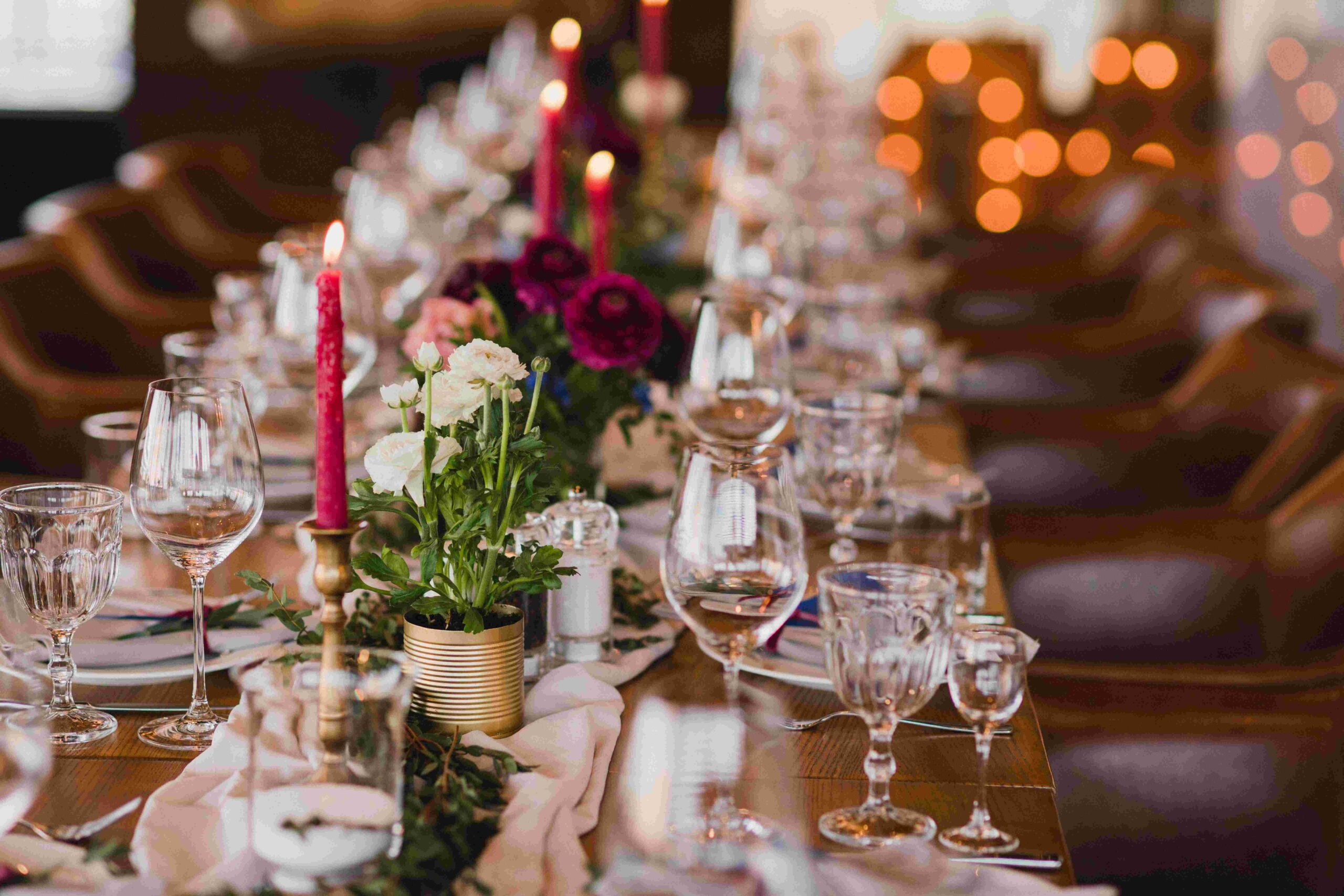


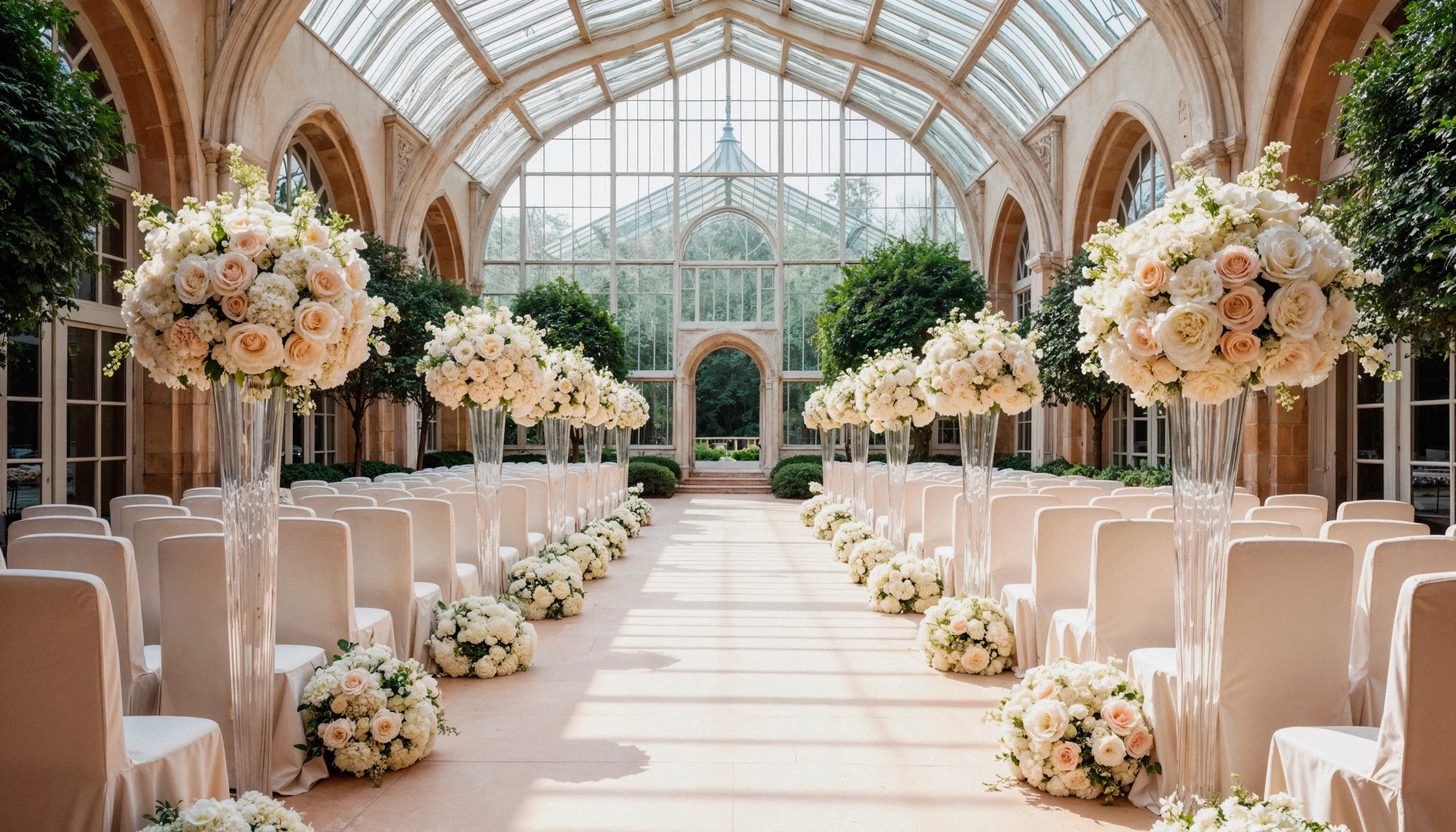
You walked into the venue on a Saturday in May. The garden was in bloom. The chandeliers were on. The coordinator was charming. By the end of the tour, you were calculating mortgage numbers in your head and signing the contract three days later.
Six months in, you will discover the kitchen has no gas line, the parking lot fits 10 cars not 40, local noise restrictions require amplified music to end by a certain time, and the “all-inclusive” package excludes the cake-cutting fee, the cocktail hour bar, and the chairs.
Now you’re paying for upgrades and fees you never planned for.
This is the situation many couples find themselves in without a proper wedding venue checklist. The brochure shows the chandeliers. The contract shows the gaps.
Thus, this guide will walk you through all questions to inquire before signing or paying.
What a Wedding Venue Checklist Actually Covers
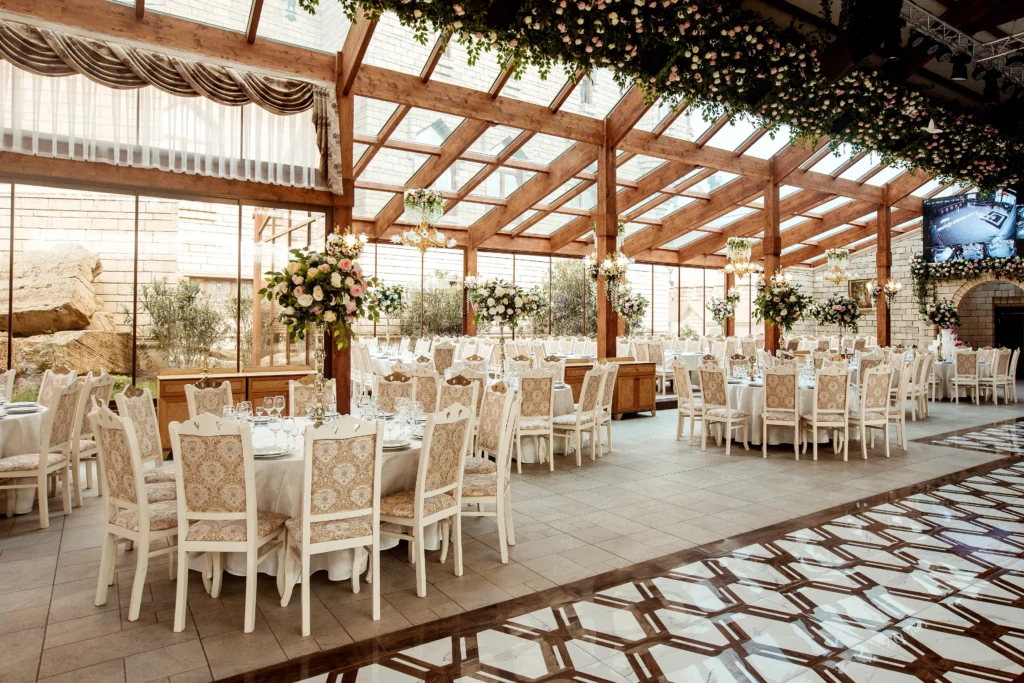
A working checklist asks the venue questions across six aspects, not just the obvious ones. Most brochures answer two or three. The other three are where the surprises live.
The six aspects:
1. Capacity and layout
2. Pricing and what is included
3. Vendor restrictions and exclusivity
4. Logistics and timing
5. Backup plans (weather, vendor failure, capacity changes)
6. Legal and contract details
A venue that answers all six clearly is worth signing. A venue that ducks on two or more is a venue that will surprise you later.
Capacity and Layout Questions
The capacity number on the website is rarely the capacity for your specific event.
1. What is the seated capacity with a dance floor included?
2. What is the standing capacity for cocktail hour?
3. Where does the ceremony happen? Indoor or outdoor? Same room as reception?
4. If indoor ceremony, how long is the room flip between ceremony and reception?
5. What is the bridal party suite size? Groom’s suite?
6. Are there enough bathrooms for the guest count?
7. Is there a separate cocktail hour space or does it happen in the reception room?
The room flip is one of the most overlooked questions couples can ask. Many venues allow around 60–90 minutes for a room flip during cocktail hour. A 30-minute flip means a rushed cocktail hour. A 2-hour flip means cold food at dinner.
Pricing and Inclusion Questions
This is where the “all-inclusive” venue terminology varies the most.
1. What is the base price for 40, 80, 120 guests?
2. What is included at base (food, drink, tables, chairs, linens)?
3. Is the cake-cutting fee included or extra?
4. Is the bartending service included? Premium bar surcharge?
5. Is the dance floor extra?
6. Are heaters or cooling units extra for outdoor sections?
7. What does the gratuity work out to, and is it auto-added to the bill?
8. What is the tax rate on food and beverage?
9. Are there fees for vendor parking, vendor meals, or venue setup access?
10. What does the deposit schedule look like? Refundable up to when?
The cake-cutting fee is the classic gotcha. Many venues charge $2 to $5 per slice to cut and plate the cake you brought from an outside baker. For a grand wedding with 150-guest, that would be $450 in fees, the brochure never mentioned.
Vendor Restrictions and Exclusivity
Many venues lock couples into their preferred vendor list. Whether that is a deal-breaker depends on what you wanted.
1. Are outside caterers allowed? If so, is there a fee?
2. Is there a required vendor list (caterer, florist, baker, DJ)?
3. Is there an exclusive bar service requirement?
4. Can we bring our own officiant? Any restrictions?
5. Can our photographer access all spaces, or are there restricted areas?
6. Are there any non-compete clauses (no other weddings on the property the same day)?
Exclusive vendor lists are not automatically bad. They often mean the venue and vendor know each other well, which reduces day-of risk. They become limiting when the available options don’t align with your vision or budget.
Logistics and Timing Questions
The questions nobody asks until day-of.
1. What time can our vendors start setup?
2. What time does the music need to end? (Many venues have local noise restrictions that may require amplified music to end by a certain time.)
3. What time does the event need to clear out completely?
4. Is there parking for the guest count? Valet available?
5. Is there a designated drop-off and pickup zone for shuttles?
6. Are there overnight accommodations on-site or nearby?
7. Is the venue accessible for elderly guests and wheelchair users?
8. Is there a kitchen on-site, and what type (warming only, full prep, gas)?
The kitchen question matters most when outside catering is allowed. A venue without a full commercial kitchen or gas connection may limit what your caterer can prepare on-site, which could affect menu options. That limits the menu options.
Backup Plan Questions
The questions couples ask too late.
1. If an outdoor ceremony rains out, what is the indoor backup?
2. If guest count drops or increases by 10 percent, what is the cost adjustment?
3. If the venue has a power outage, generator on-site?
4. If a key vendor cancels, does the venue have backup contacts?
5. What is the cancellation policy if we (the couple) need to postpone?
6. What is the venue’s policy if they need to cancel us?
The COVID-19 pandemic prompted many venues to include clearer postponement and cancellation terms in their contracts.
Legal and Contract Questions
The fine print that decides what happens when things go wrong.
1. Is there a force majeure clause? What does it cover?
2. Who carries liability insurance for the event?
3. Are we required to carry our own event insurance?
4. What is the dispute resolution process if something goes wrong?
5. Are there any HOA or local restrictions on event timing or noise?
6. Is the venue licensed for alcohol service?
7. Does the contract specify a clear refund timeline for cancellations?
These questions sound dry. These are often the clauses that become most important if a dispute arises.
The 30-Question Venue Checklist at a Glance
| Dimension | Top 3 questions |
| Capacity + layout | Seated with dance floor? Room flip time? Bridal suite size? |
| Pricing + inclusion | Cake fee? Bartender included? Gratuity auto-added? |
| Vendor restrictions | Outside caterer fee? Required vendor list? Exclusive bar? |
| Logistics + timing | Vendor setup time? Music cut time? Parking capacity? |
| Backup plans | Rain backup? Power outage? Postponement policy? |
| Legal + contract | Force majeure? Event insurance? Refund timeline? |
The detailed list above is what we walk every couple through at White Wave Events before signing.
Five Common Mistakes Couples Make During Venue Tours
1. Touring on perfect-weather days only. If possible, visit the venue in different weather conditions or ask to see photos of rainy-day setups.
2. Trusting the verbal answer over the contract. Every promise has to be in writing. Coordinators change, owners change, the contract holds.
3. Skipping the kitchen tour. Especially if outside catering is allowed.
4. Not asking what the local music curfew is. A fixed music curfew can significantly affect your reception timeline.
5. Falling in love before doing the math. The chandeliers will still be there after you calculate the cake-cutting fee.
Each is preventable with the checklist.
What a Wedding Planner Adds to Venue Selection
Experienced wedding planners in New Jersey and New York regularly work with many of the region’s major venues. They bring valuable insights, including:
1. Real pricing knowledge across venues (not just the brochure number)
2. Experience working with different vendors.
3. Awareness of common contract issues they’ve encountered.
4. Insight into which venues manage weather and contingency plans effectively.
Final Thoughts
A wedding venue checklist is not a buzzkill. It is the document that makes the chandeliers possible without any expensive surprises.
Ask the 30 questions above. Listen for the answers that come slowly or with hedging. Read every clause of the contract before signing. Walk away from a venue that ducks two or more of these dimensions.
The venue you sign with is the foundation of the entire wedding. Spend an extra week getting this right. You will spend it back fivefold in the months that follow.
Planning to tour wedding venues in New Jersey or New York?
Book a venue consultation with White Wave Events, and we’ll assist you with every aspect for your special day.
FAQ
Q1. What questions should I ask before booking a wedding venue?
A. Before signing, inquire about capacity, pricing, what’s included, vendor policies, setup times, backup plans, cancellation terms and contract details.
Q2. What is usually included in an all-inclusive wedding venue?
A. It depends on the venue. Always check if catering, bar service, tables, chairs, linens, cake cutting, setup, cleanup, and gratuities are included or charged separately.
Q3. Can I bring my own vendors to any wedding venue?
A. Not necessarily. Some venues require the use of preferred or exclusive vendors, while others allow outside vendors, sometimes for an additional fee.
Q4. What hidden wedding venue costs should I watch for?
A. Typical hidden costs include cake-cutting fees, service charges, taxes, gratuities, premium bar upgrades, vendor meals, parking fees, and overtime charges.
Q5. Why is the venue contract so important?
A. The contract sets out payment schedules, cancellation policies, refunds, liability, insurance requirements and what happens if plans change so it’s important to read it carefully before signing.